Dog Friendly Airlines in Cabin: Which Airlines Let Your Dog Fly With You?
Traveling with your dog can feel overwhelming, but knowing which airlines welcome pets in the cabin makes all the difference. We have flown coast to coast with our dogs and learned exactly what works—and what does not.
In this guide, we break down every major U.S. airline that allows dogs in the cabin, including their fees, carrier size limits, and key restrictions. You will also find tips for preparation, booking, and making the journey as smooth as possible for both you and your four-legged companion.
Quick Overview: Airlines That Allow Dogs in Cabin
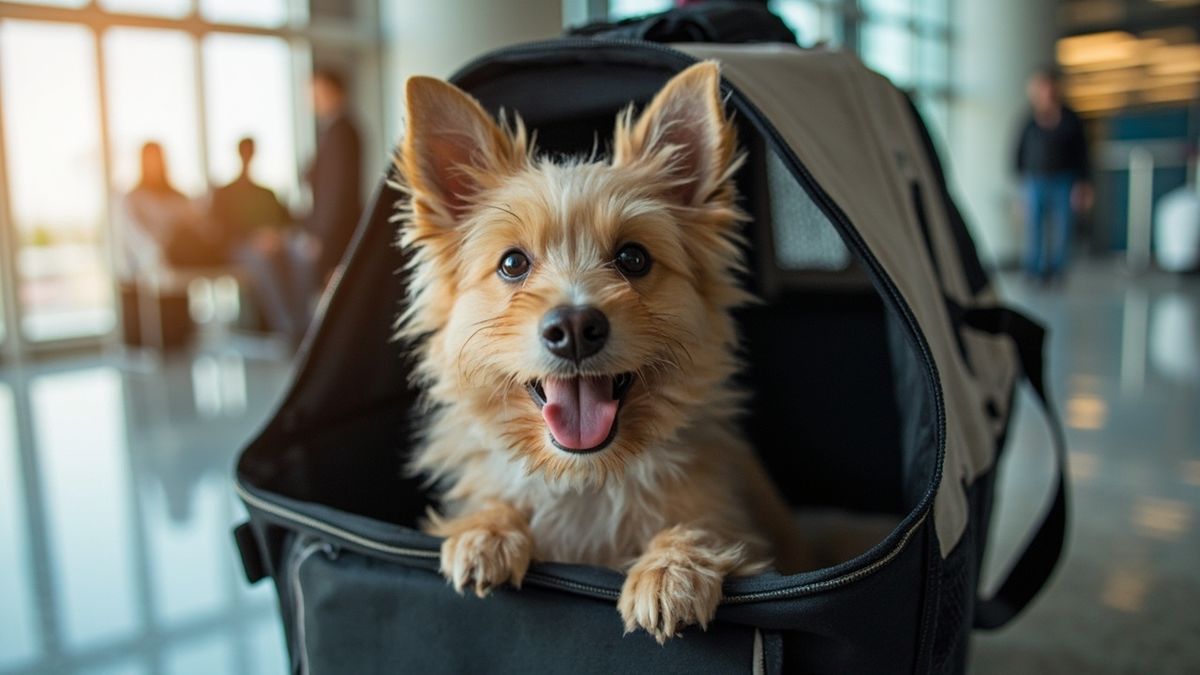
Most major U.S. airlines permit small dogs in the cabin as carry-on pets. The pet must stay in an airline-approved carrier under the seat in front of you for the entire flight.
| Airline | Fee (One-Way) | Max Carrier Size | Pets Allowed |
|---|---|---|---|
| Alaska Airlines | $100 | 17" x 11" x 9.5" | Dogs, cats, rabbits |
| American Airlines | $150 | 18" x 11" x 11" (soft) | Dogs, cats |
| Delta Air Lines | $150 domestic / $200 intl | 18" x 11" x 11" | Dogs, cats, birds |
| Frontier Airlines | $99 | 18" x 14" x 8" | Dogs, cats, rabbits, hamsters, birds |
| Hawaiian Airlines | $35 interisland / $100 mainland | 17" x 11" x 9.5" | Dogs, cats, rabbits |
| JetBlue | $150 | 17" x 12.5" x 8.5" | Dogs, cats |
| Southwest Airlines | $125 | 18.5" x 13.5" x 9.5" | Dogs, cats |
| Spirit Airlines | $125 | 18" x 14" x 9" | Dogs, cats, rabbits, birds |
| United Airlines | $150 | 18" x 11" x 11" (soft) | Dogs, cats |
Fees and policies change often. Always confirm with your airline before booking.
How In-Cabin Pet Travel Works
When you bring your dog in the cabin, they count as either your carry-on bag or your personal item. You cannot bring a pet plus a full-size carry-on and a personal item. Choose wisely.
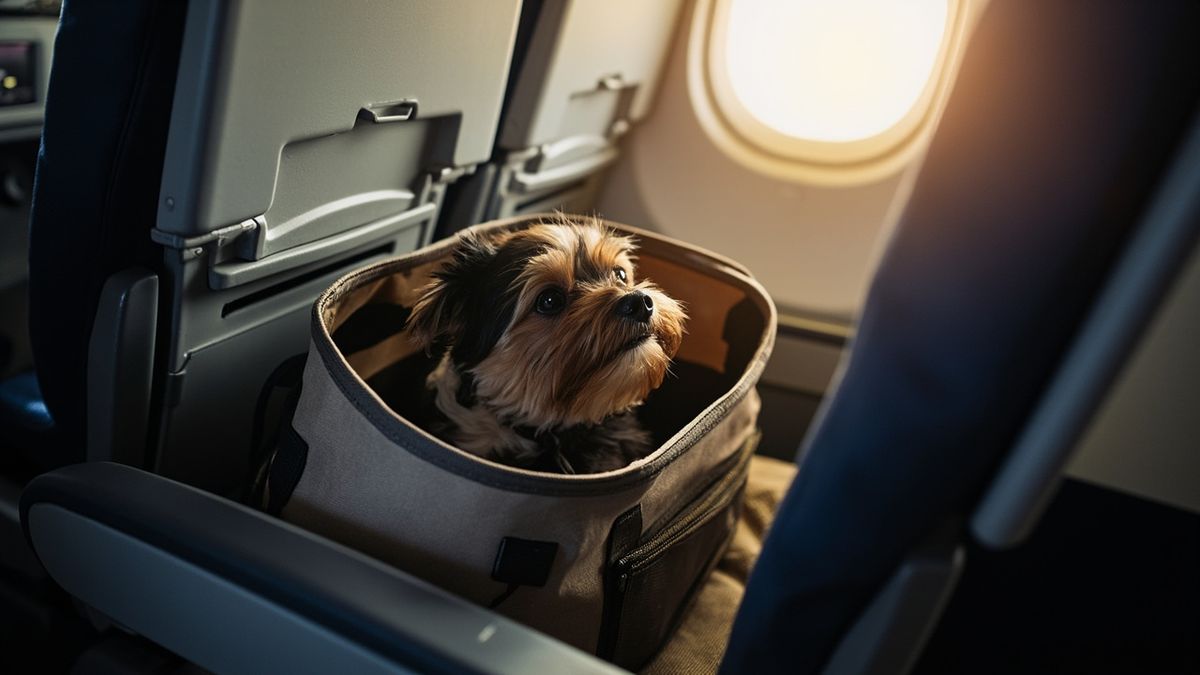
Your dog must remain in their carrier under the seat in front of you from boarding until deplaning. No lap time. No walks in the aisle. This rule is universal across all airlines.
Weight and Size Limits
Airlines do not usually publish a specific weight limit. Instead, the rule is that your pet must fit comfortably in an approved carrier that slides under the seat.
For most carriers, this means your dog should be small enough to stand, turn around, and lie down naturally inside a carrier roughly 18 inches long, 11 inches wide, and 11 inches high. Dogs weighing 15 to 20 pounds typically fit, depending on breed and build.
Brachycephalic breeds—like French Bulldogs, Pugs, and Boston Terriers—are welcome in the cabin on most airlines but banned from cargo travel due to breathing risks.
The Most Pet-Friendly U.S. Airlines
Alaska Airlines — Best Overall
Alaska Airlines consistently ranks as the most pet-friendly major carrier. At $100 each way, it is among the most affordable options. They accept dogs, cats, and rabbits in the cabin.
- Cabin limit: 8 pets in main cabin, 3 in first class
- Multiple pets: Two pets of the same species can share one carrier
- Cargo option: Yes, for larger animals up to 150 lbs
- Booking: You cannot add pets online. Call or chat to reserve
If you are flying within the U.S. or to Mexico and Canada, Alaska is often your best bet.
Delta Air Lines — Reliable for International
Delta charges $150 for domestic flights and $200 for international. They allow dogs, cats, and household birds.
- Cabin limit: 4 pets per main cabin section
- Cargo: Delta discontinued its cargo pet program
- Restrictions: No pets on flights to Australia, Barbados, Brazil, Dubai, Hawaii, Iceland, Jamaica, New Zealand, South Africa, UK, or UAE
Delta works well for transatlantic routes where other airlines impose stricter weight limits.
American Airlines — Generous Carrier Sizes
American charges $150 each way for dogs and cats only. Their carrier dimensions are among the most forgiving.
- Soft-sided carriers: 18" x 11" x 11"
- Hard-sided carriers: 19" x 13" x 9" (mainline) or 16" x 12" x 8" (American Eagle)
- Destinations: Within U.S., Canada, Mexico, Central America, Caribbean on flights under 12 hours
- No cabin pets to Europe
American is a solid choice if your dog needs extra space but still fits within their generous carrier limits.
Southwest Airlines — Simple and Domestic
Southwest charges $125 each way. Dogs and cats only, on domestic flights.
- Carrier size: 18.5" x 13.5" x 9.5" (largest industry standard)
- Pets per flight: Maximum 6 carriers
- Booking: Add pet at check-in, not during initial reservation
- Multiple pets: Two pets of the same species can share a carrier
Southwest is ideal for straightforward domestic travel with simple rules.
Frontier Airlines — Budget Option
At $99 each way, Frontier is the cheapest mainstream choice. They also accept the widest variety of animals.
- Pets allowed: Dogs, cats, rabbits, guinea pigs, hamsters, small birds
- Carrier size: 18" x 14" x 8" (hard) or 18" x 14" x 11" (soft)
- Cargo: No
If you are traveling with a rabbit or hamster, Frontier may be your only option.
Hawaiian Airlines — Best for Island Travel
Hawaiian offers the best deal for interisland flights at just $35 each way. Mainland-to-Hawaii costs $100.
- Pets allowed: Dogs, cats, rabbits
- Cargo: Yes, $60 to $225
- Restrictions: No pets on international routes
Keep in mind Hawaii has strict quarantine rules even for U.S. arrivals. Plan paperwork months ahead.
Service Dogs vs. Pets
Service dogs fly free in the cabin on all airlines. They are not subject to pet fees, carrier requirements, or size limits.
Requirements:
- Must be individually trained to perform tasks for a person with a disability
- Airlines require the DOT Service Animal Air Transportation Form submitted 48 hours before departure
- No carrier needed; service dogs sit at handler’s feet
Emotional support animals (ESAs) no longer receive special treatment. Since 2021, ESAs are treated as regular pets with standard fees and carrier rules.
International Pet Travel Considerations
Flying internationally with a dog involves much more paperwork.
Common Requirements
- USDA-endorsed health certificate (APHIS Form 7001) within 10 days of departure
- Microchip
- Rabies vaccination records
- Some countries require titer tests months in advance
Destination-Specific Rules
- European Union: Microchip, rabies vaccine, EU health certificate. Some countries require advance titer tests.
- United Kingdom: Most U.S. airlines do not allow in-cabin pets to the UK. Check cargo options or European carriers.
- Australia/New Zealand: Extensive preparation, 10-day quarantine minimum.
- Hawaii: Not international, but has rabies quarantine. Direct release possible with two rabies vaccines, microchip, and titer test 120+ days before arrival.
Start international pet travel paperwork three to six months ahead.
Choosing the Right Pet Carrier
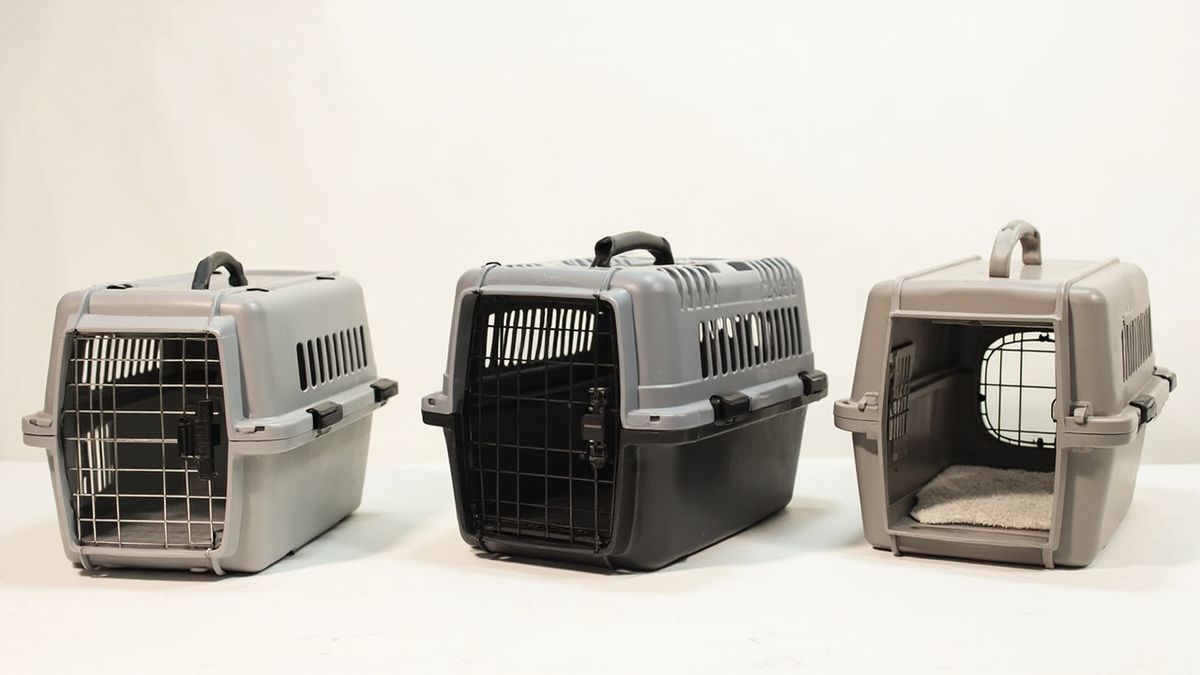
Your carrier must be airline-approved and fit under the seat. Soft-sided carriers are generally preferred because they flex to squeeze into tighter spaces.
Recommended Features
- Waterproof bottom
- Mesh panels for ventilation
- Padded interior
- Secure zippers (some airlines require lockable zippers)
- Shoulder strap for carrying through the airport
Popular Brands
Sherpa, Petmate, and Mr. Peanut all make carriers that meet airline standards. Many travelers use the Sherpa Original Carrier or similar soft-sided models.
Preparing Your Dog for the Flight
Before You Fly
- Visit your vet within 10 days for a health certificate if required
- Practice carrier time at home so your dog feels comfortable
- Book direct flights to minimize stress and avoid extra pet fees
- Call to reserve your pet spot early—most airlines limit cabin pets
- Check breed restrictions if your dog is brachycephalic
Day of Travel
- Limit food 4 hours before the flight to reduce accidents
- Offer water right before boarding
- Bring pee pads for the carrier floor
- Pack a small toy or blanket for comfort
- Do not sedate your dog—sedatives can cause breathing issues at altitude
At the Airport
- Keep your dog in the carrier except during security screening
- TSA will ask you to hold your dog while the carrier goes through X-ray
- Walk your dog before boarding if possible
- Board last to minimize time in the cramped cabin
What to Expect During the Flight
Once seated, slide the carrier under the seat in front of you. Your dog must stay inside.
Most dogs settle down and sleep after takeoff. Bring a blanket to cover the carrier if your dog seems anxious—darkness helps.
If your dog becomes disruptive (barking, whining, trying to escape), flight attendants may require you to address the situation. In extreme cases, you could be asked to deplane.
Fees and Costs Breakdown
Pet travel adds real cost to your trip.
| Airline | Round-Trip Pet Fee |
|---|---|
| Frontier | $198 |
| Alaska | $200 |
| Southwest | $250 |
| Spirit | $250 |
| American | $300 |
| Delta (domestic) | $300 |
| JetBlue | $300 |
| United | $300 |
| Delta (international) | $400 |
These fees are non-refundable even if you cancel your flight. Some airlines allow pet fee transfers if you rebook.
Airlines That Do Not Allow Dogs in Cabin
Some carriers simply do not permit in-cabin pets:
- Allegiant Air: No pets in cabin, cargo only
- Sun Country: Cargo only
- Breeze Airways: No pets in cabin
- Avelo Airlines: No pets
For these airlines, larger dogs must fly as checked baggage or cargo, and small dogs are not welcome at all.
Alternatives: Private Jet and Pet-Only Airlines
If commercial airlines do not work for your situation, consider alternatives.
Bark Air
Bark Air is a new airline designed specifically for dogs. Dogs fly without carriers, enjoy treats, and sit with their owners. Prices are much higher than commercial flights.
K9 Jets
K9 Jets operates private jet charters for pet owners. Your dog flies freely in the cabin with no carrier restrictions.
Villiers Jets and Other Charters
Private jet brokers like Villiers arrange flights where your dog can roam the cabin. Costs vary widely based on aircraft and route.
These options work for travelers willing to pay significantly more for a premium experience.
Frequently Asked Questions
Which airline is most dog-friendly?
Alaska Airlines ranks as the most pet-friendly major U.S. carrier due to affordable fees, multiple pet options, and generous policies.
Can large dogs fly in the cabin?
Generally no. Most airlines require dogs to fit in a carrier under the seat, which limits size to roughly 15-20 pounds. Service dogs are exempt.
How much does it cost to fly with a dog?
Pet fees range from $99 to $200 each way on commercial airlines. Round-trip costs add $198 to $400 to your travel budget.
Do airlines require health certificates?
For domestic flights, most airlines do not require health certificates. International flights almost always require a USDA-endorsed health certificate within 10 days of departure.
Can I take my dog out of the carrier during the flight?
No. Your dog must remain in the closed carrier under the seat for the entire flight. This rule applies to all U.S. airlines.
What if my dog barks during the flight?
If your dog is disruptive, flight attendants may intervene. Bring a blanket to cover the carrier and calm your dog. Persistent barking could result in being asked to deplane.
Can I bring two dogs?
Some airlines allow two pets of the same species in one carrier (Alaska, Southwest). Others allow one pet per carrier with limits per flight.
Are brachycephalic breeds allowed?
Yes, in the cabin. French Bulldogs, Pugs, and similar breeds are banned from cargo due to breathing risks but can fly in the cabin if they fit in a carrier.
Final Tips for Stress-Free Travel
- Book early and call to reserve your pet spot
- Choose direct flights when possible
- Practice with the carrier at home
- Pack essentials: pee pads, toy, small water bowl
- Arrive early for security screening
- Stay calm—your dog senses your stress
Flying with your dog takes planning, but it is entirely manageable with the right airline and preparation. We hope this guide helps you and your co-pilot enjoy the journey together.
Related Articles
- Dog friendly hotels in Morro Bay: A practical guide for traveling with your dog
- Expedia dog friendly hotels: The ultimate guide to booking pet-friendly stays
- Mammoth dog friendly hotels: where to stay with your dog in Mammoth Lakes, CA
- Valdosta dog friendly hotels: Where to stay with your dog and avoid surprise fees